Croatia Small Ship Cruises: Why Boat Size Changes Everything
The best Croatia small ship cruises are not all the same — and the biggest reason comes down to one thing: how many people are on the boat with you. The Adriatic is having a moment, with dozens of operators running itineraries from Istria in the north all the way down to Dubrovnik, but the gap between a trip you talk about for years and one you quietly regret is almost always boat size.
This guide breaks down every category of vessel you will actually encounter in Croatia, explains the trade-offs honestly, and makes the case for why a private motor yacht under 40 guests is the sweet spot for open water swimming. We run Croatia small ship cruises at Swim Traveller, so we will be upfront about our perspective, but the goal here is to help you choose well regardless of who you book with.
Best Croatia Small Ship Cruises: How Boat Size Shapes Your Experience
Not all Croatia cruises are the same, and the biggest reason is vessel size. Here is an honest breakdown of the four categories you will encounter — what each delivers, and where each falls short.
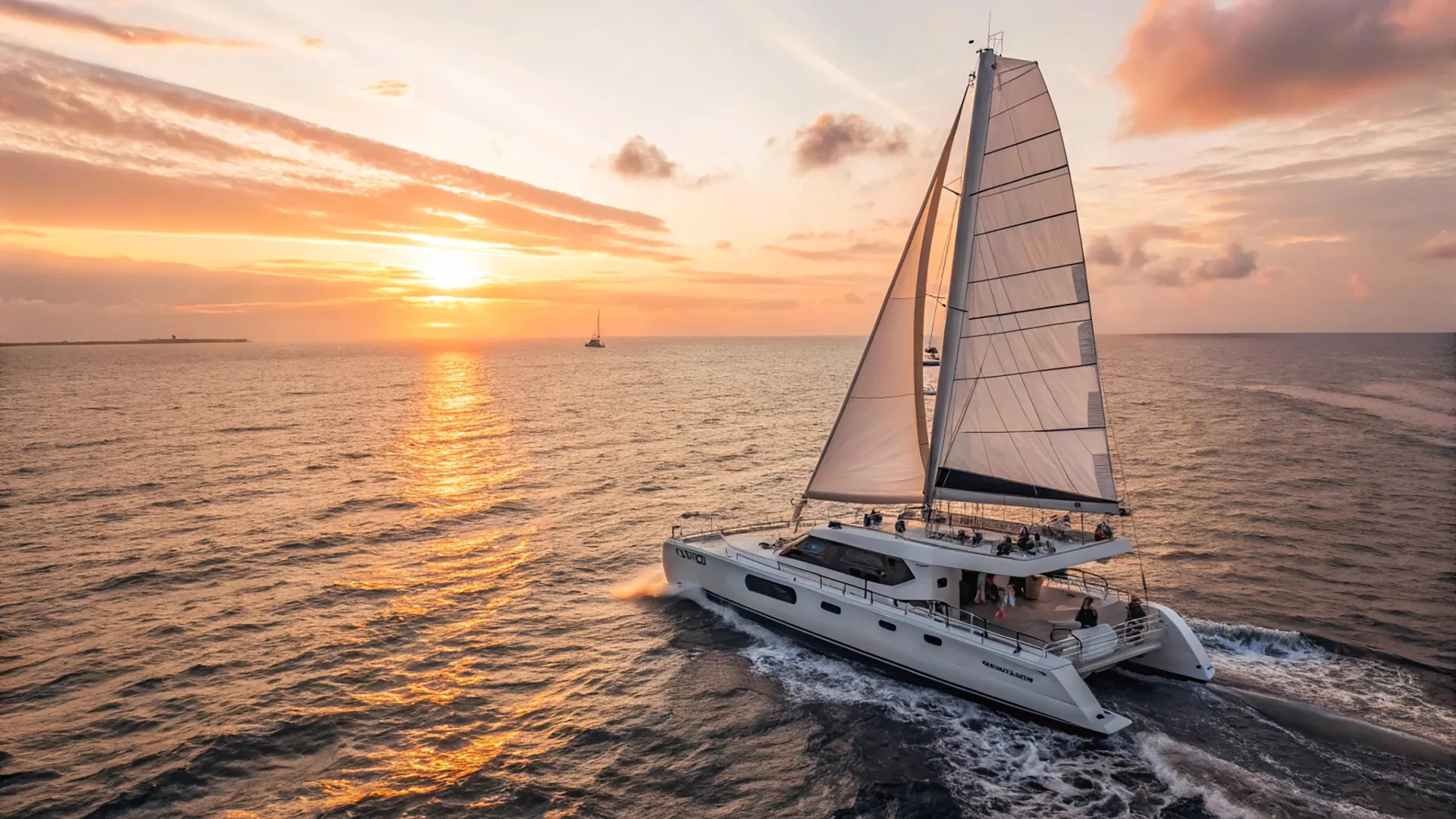
The most intimate option on the water. Total freedom to anchor wherever you want and go at your own pace. The trade-off is comfort: shared bathrooms, limited cabin space, and cooking in a small galley is more effort than glamour. Ideal for experienced sailors or small groups who want total independence and are happy to rough it slightly.
If you go the catamaran route specifically, it is also worth knowing this is one of the steadiest rides on the water short of a cruise ship: the twin-hull design gives a catamaran maximum stability, second only to a cruise ship, and every cabin sits above the waterline rather than below it. Worth asking about directly if seasickness is a concern.
- Complete privacy for your group
- Go anywhere, any time
- Most flexible itinerary
- Lowest entry price point
- On a catamaran: maximum stability, second only to a cruise ship — reassuring if you're prone to seasickness
- On a catamaran: every cabin is above water level
- Limited space and comfort
- You handle cooking and cleaning
- Exposed in rough weather
- No professional swim guide or safety cover
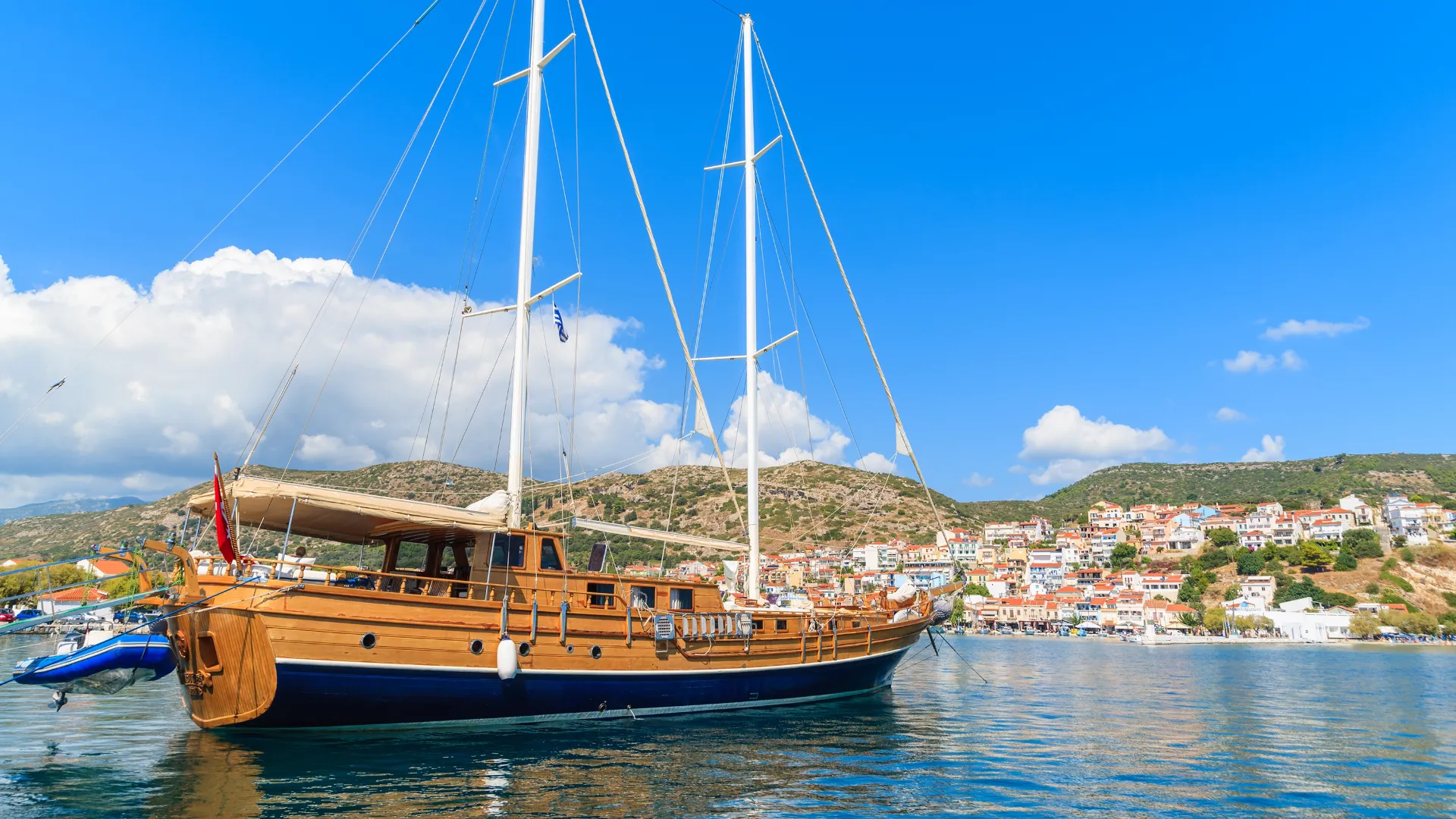
The gulet is Croatia's most recognisable charter vessel: broad teak decks, shaded awnings, and a relaxed pace that suits groups of friends or family who want the whole boat to themselves. Most gulets carry 12–20 guests across 6–10 en-suite cabins and come with a full crew including a chef. The larger builds stretch to 30 guests. Pricing typically runs €15,000–€45,000 per week for the whole vessel — split across a group, this can be very competitive.
The limitation is that a gulet is chartered as a private vessel for your group. It is not a structured, activity-led trip — there is no coach in the water, no planned swim sessions, and no safety kayak. If you want to swim, you swim off the back. That is wonderful for a leisure holiday; it is not the same as a coached open water experience. And because the boat is yours collectively, the itinerary is too: if half the group wants to linger and swim while the other half wants to push on into town, someone ends up outvoted.
- Iconic, beautiful vessel
- Intimate feel — private charter for your group
- Full crew including chef
- Competitive per-person cost when split
- Must fill the boat yourself — no solo or couple bookings
- No coaching, structured swimming, or safety cover
- Older vessels can feel tired below deck
- Less suited to hidden coves than a motor yacht
- Shared itinerary means conflicting agendas — easy to get outvoted on stopping to swim versus pushing on to the next town
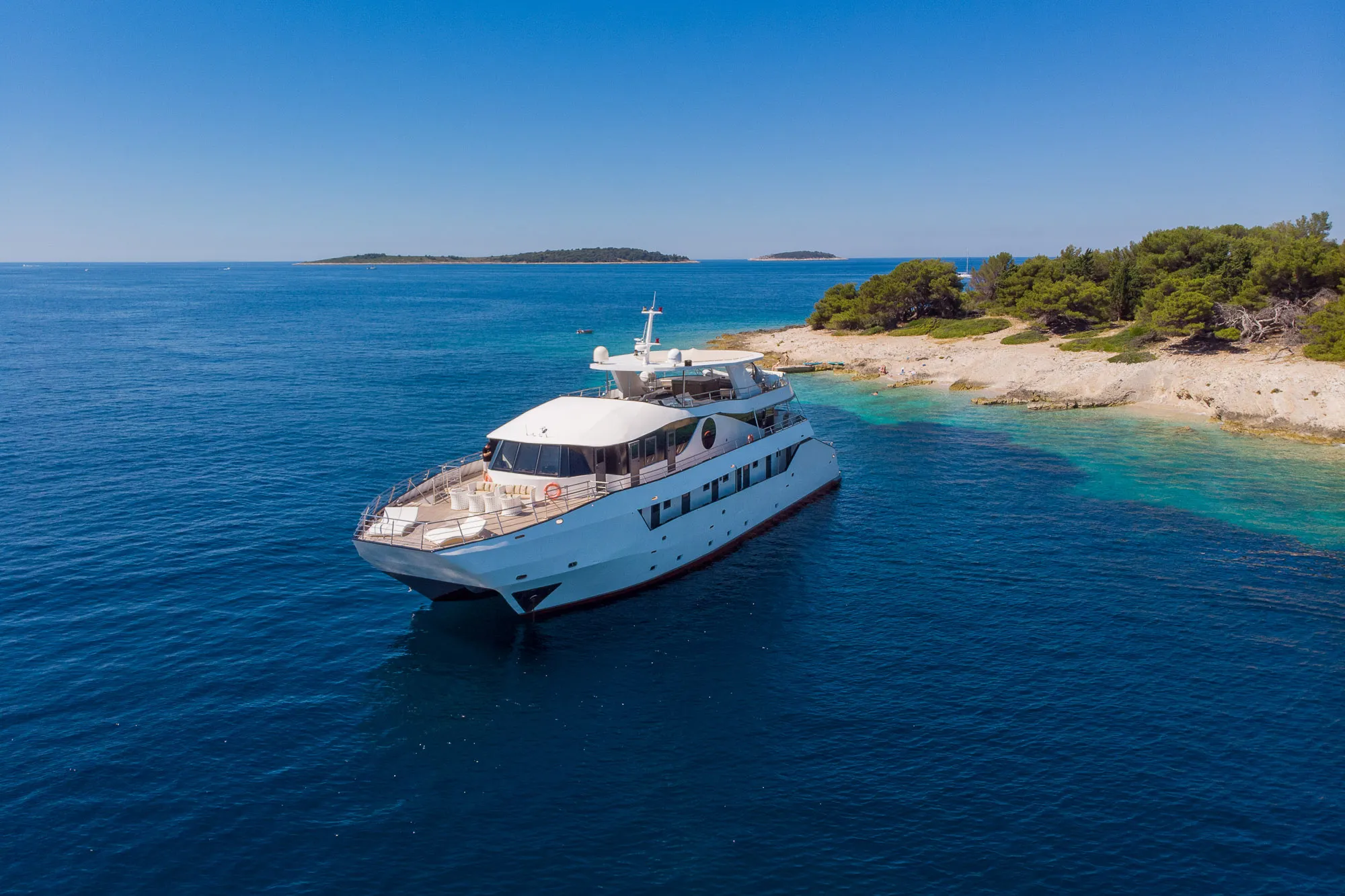
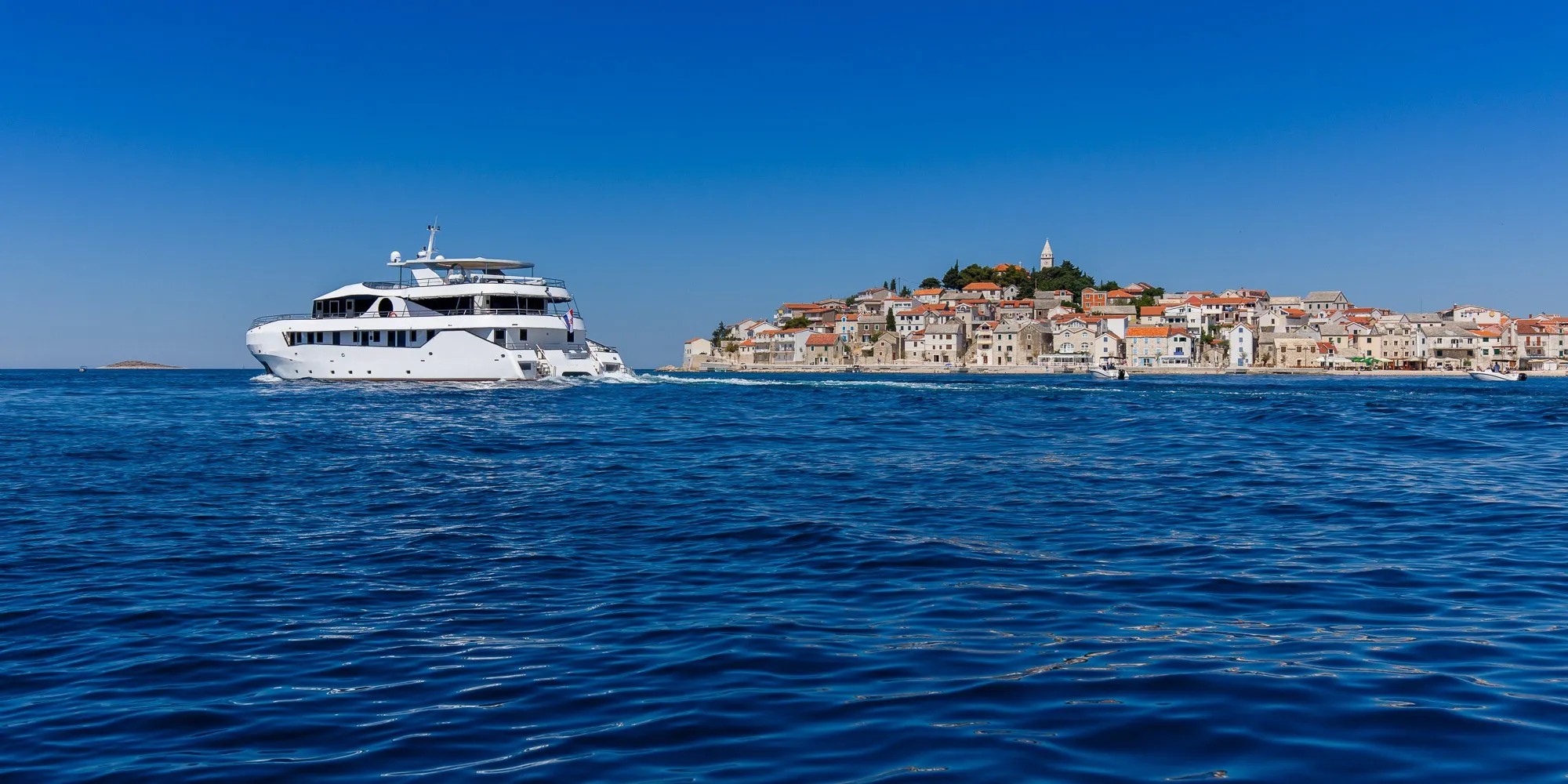
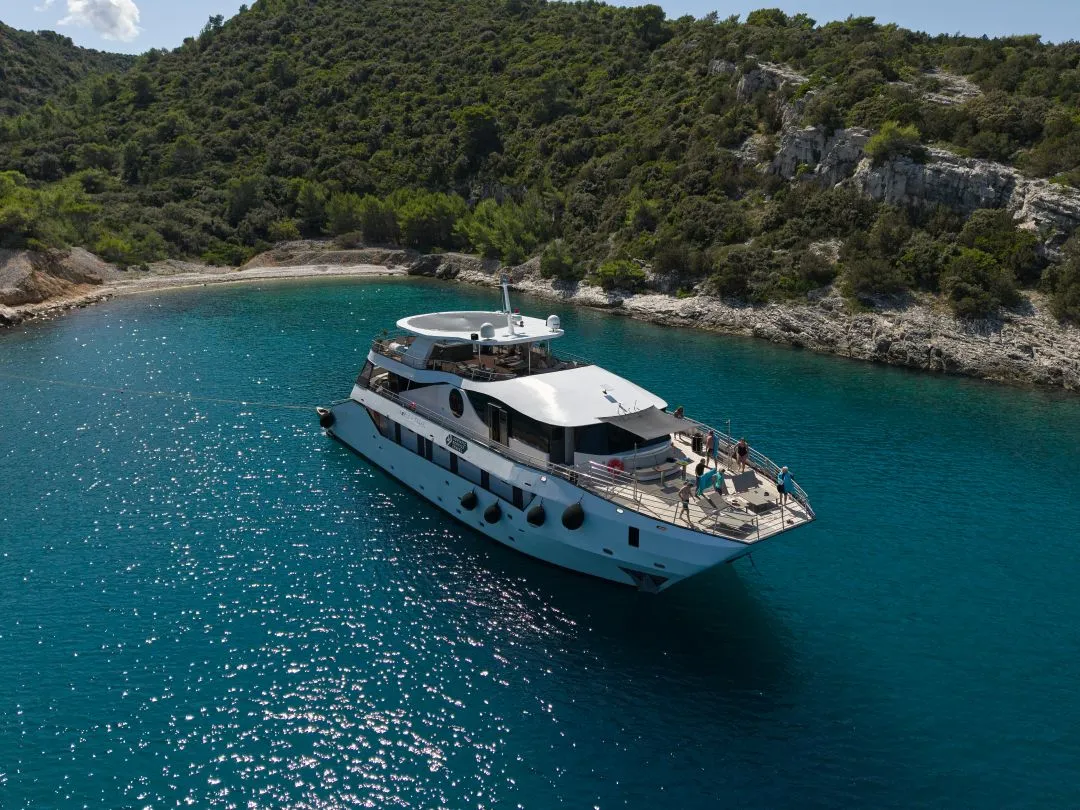
A modern private motor yacht in the 30–40 metre range combines the intimacy of a smaller gulet with the comfort and performance of a purpose-built vessel. Where a gulet requires you to bring your own group, a Swim Traveller cruise brings together up to 28 like-minded swimmers — so you book as a solo traveller, a couple, or a small group and meet the rest on board. That social dynamic, a group of strangers united by the water, is one of the things guests talk about most after the trip.
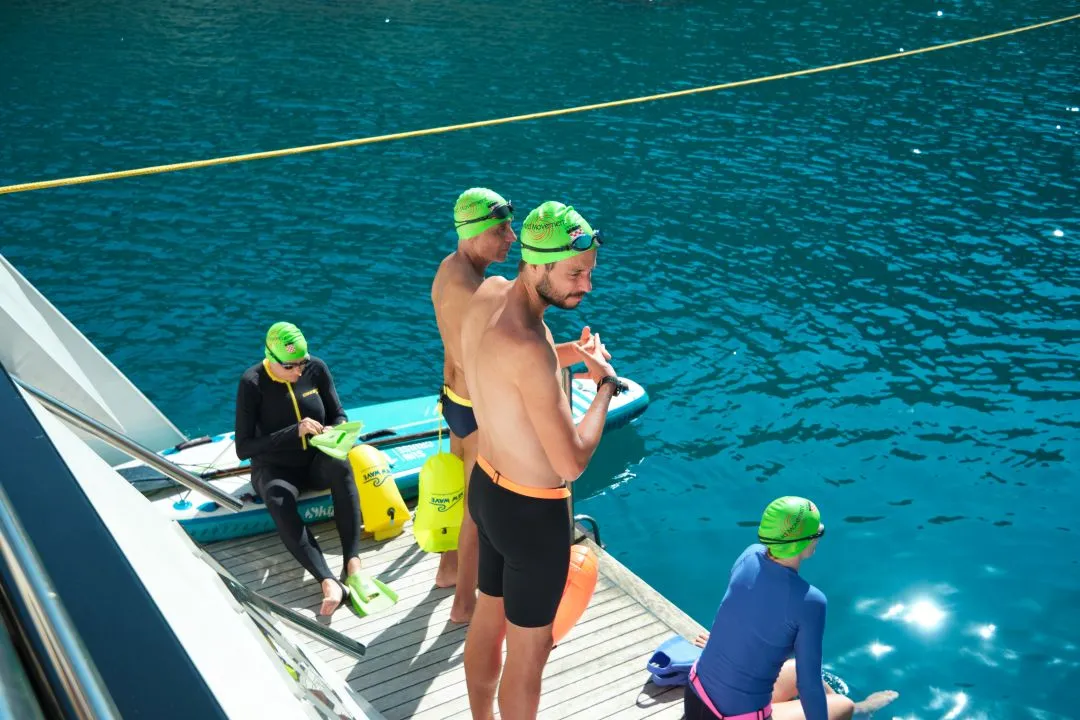
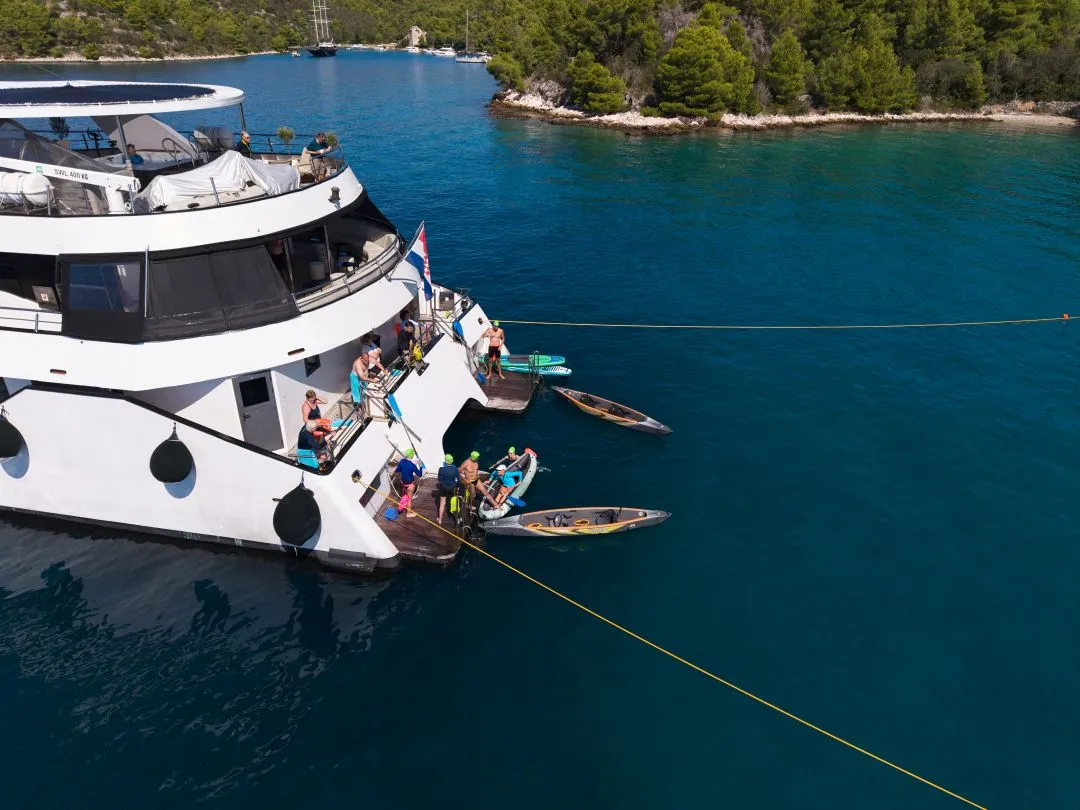
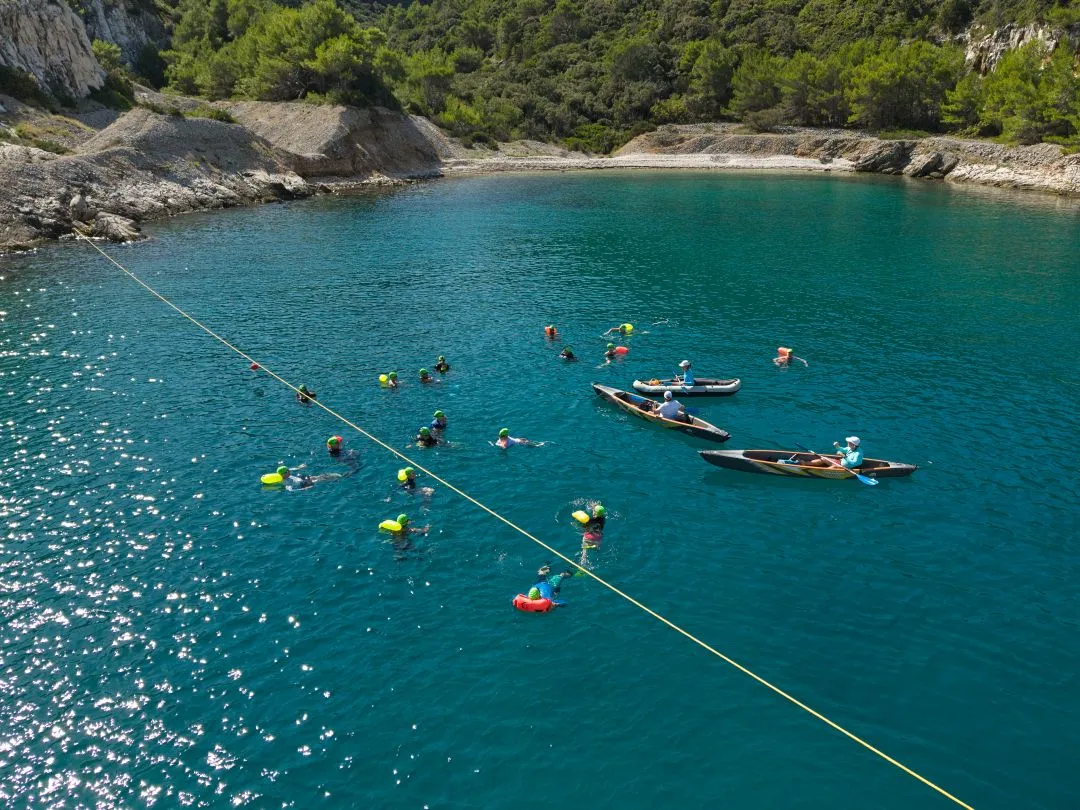
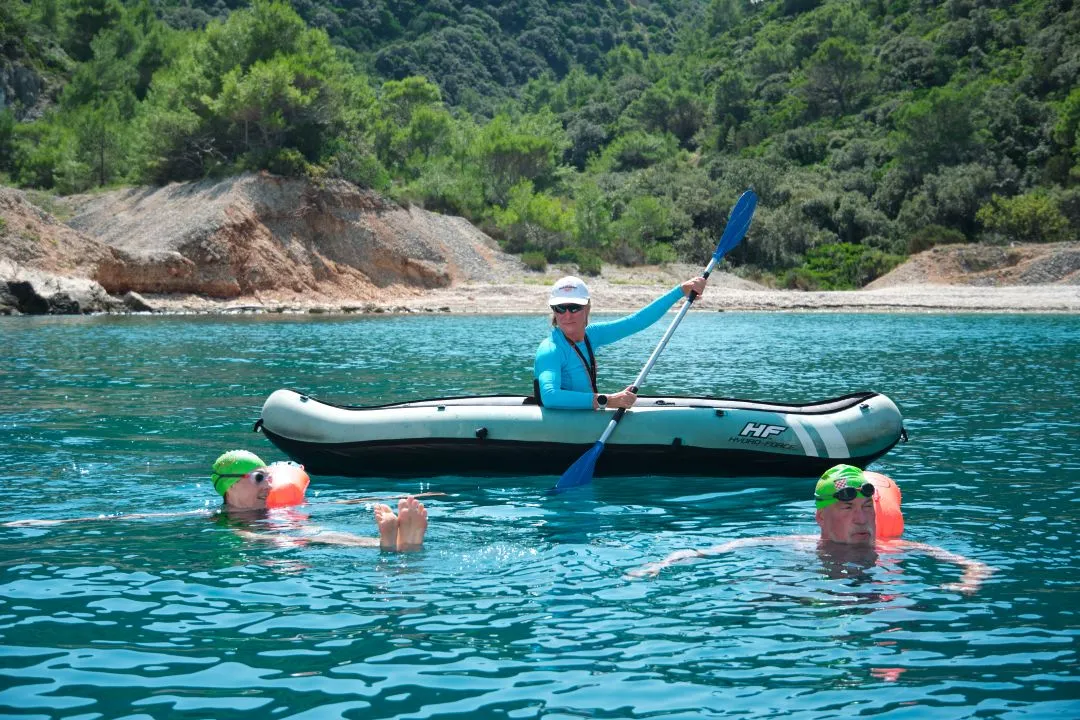
For open water swimming, this format is unmatched. A dedicated swim platform at the stern puts you inches above the waterline — step down and in, no jumping or ladders. The boat anchors in protected coves chosen for water clarity, not port access. A safety kayak deploys from the side. Your coach is in the water with you every session. The itinerary is built entirely around where the swimming is best.
- Intimacy of a small gulet, comfort of a modern yacht
- Great for solo travellers looking to meet new people
- Safe, easy water access — low platform with steps straight into the water, and just as easy to climb back on
- Personalised coaching and structured daily sessions
- Kayak safety cover on every swim
- Anchorages chosen for swimming, not tourism
- Higher per-person cost than a shared gulet charter
- Fixed departure dates — less flexible than a private charter
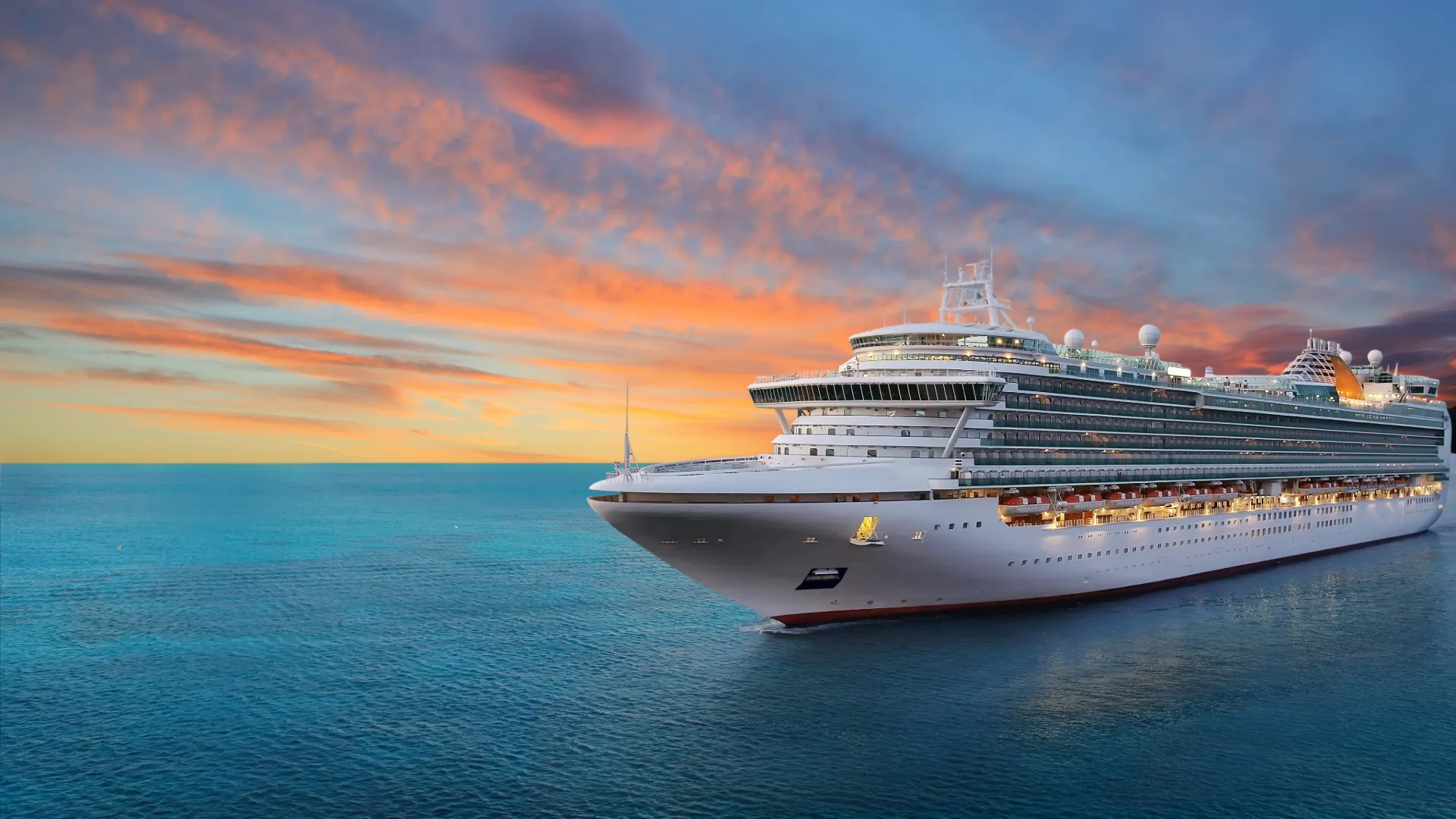
The big cruise lines — Royal Caribbean, MSC, Norwegian, Celebrity — call at Dubrovnik, Split, and Zadar on broader Mediterranean routes. The ships are impressive, the amenities extensive, and the price per day can look competitive when accommodation and meals are bundled. But Croatia's coastline simply does not suit this format. Deep-water berths are limited to a handful of major ports, and arriving in Dubrovnik behind 3,000 other passengers in July is a fundamentally different experience from what the Adriatic actually offers.
That bottleneck is getting tighter, too. Split's main cruise berth, Gat Sv Petra, is currently mid-way through a multi-year reconstruction, and much of the traffic that would normally dock there has been redirected to Trogir or the West Split terminal. For an already-limited list of deep-water ports, that is one fewer major option for liners docking in Croatia right now.
If you are choosing a cruise primarily for Croatia — for the islands, the swimming, the quiet coves — a cruise ship is not the right tool.
- Extensive on-board entertainment and amenities
- Competitive value for cabin + meals bundle
- No logistics — everything is handled
- Limited to major ports only, and even fewer with Split's main berth under reconstruction
- No access to hidden coves or islands
- Shore time is crowded and rushed
- Not suited to open water swimming
The Swim Platform: Why It Matters for Open Water Swimmers
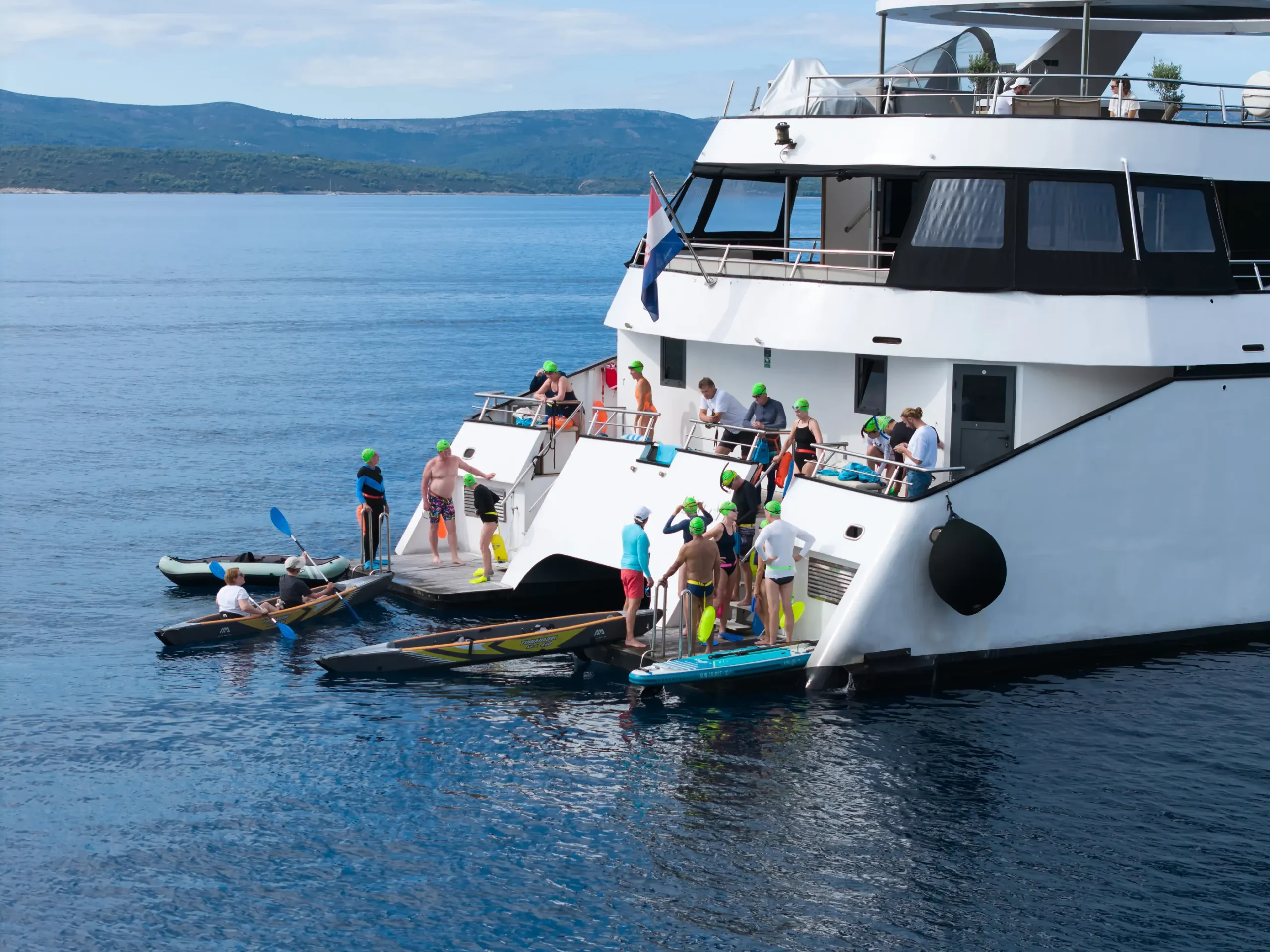
Safe, Easy Water Access
The swim platform is the low-slung deck at the stern of the yacht, positioned just above the waterline. Built-in steps lead straight down into the water, so swimmers walk in rather than jumping or climbing over a high gunwale. Getting back aboard is just as simple: swim to the platform, take the steps up, done. For open water swimmers doing multiple sessions a day, this kind of frictionless access changes everything about the rhythm of the trip.
Why Croatia Is One of the Best Places to Swim in Europe
Croatia's coastline runs for more than 1,800 kilometres from Istria in the north to the Bay of Kotor near the Montenegrin border — and almost all of it is accessible only by boat. The water is clear to ten metres in most anchorages, salinity runs slightly higher than the Atlantic so you float more naturally, and sea temperatures between late June and September sit in the 22–26°C range, warm enough to swim comfortably without a wetsuit for most people.
The Croatian coast splits into three distinct sailing regions, each with its own character. Istria in the northwest is green, Roman, and relatively uncrowded. The Kvarner Gulf — Cres, Lošinj, Rab, Krk — is wilder and far quieter than the south. The Dalmatian Coast from Zadar to Dubrovnik is the headline corridor: famous islands, ancient walled towns, and the most sought-after anchorages in the Adriatic. A well-chosen small ship cruise can work in any of these regions.
How to Choose a Croatia Small Ship Cruise: 6 Things to Check
Once you have settled on a private motor yacht format, these are the six things worth checking before paying a deposit.
Guest count
Ask for the maximum, not the average. Under 30 is genuinely intimate. A boat that will not give you a hard number is telling you something.
The route
Look at where it actually anchors, not just the start and end cities. The best itineraries name specific coves and islands. Vague routes that only list big ports usually mean big-port days.
En-suite cabins
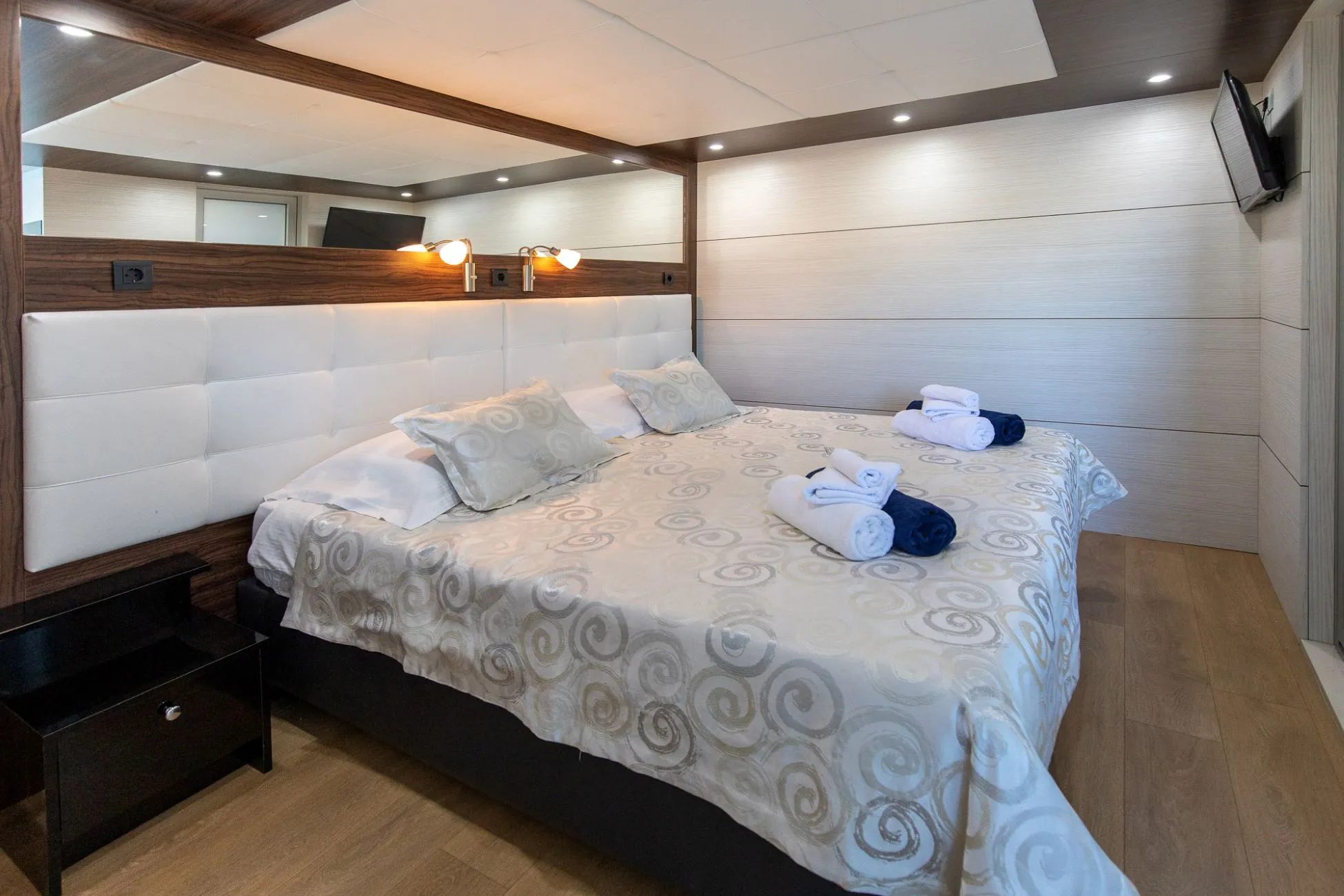
On a week-long trip, a private bathroom is not a luxury, it is sanity. Confirm every cabin is en-suite, ask about air conditioning, and check whether lower-deck cabins have real windows.
What is included
Pin down meals, harbour fees, fuel, drinks, equipment, and shore excursions. A cheap headline rate with everything billed on top rarely ends up cheap.
Crew ratio
More crew per guest means better food, faster service, and a safer boat. Seven crew for under 30 guests is a strong sign. Two deckhands running a full vessel is not.
Activity focus
Decide what the days are built around: sightseeing, partying, or an activity like swimming. The clearer the focus, the better the trip. Mismatched expectations are the number one source of regret.
Choosing a Route: Three Croatian Coastline Corridors
Croatia's coastline covers three distinct sailing regions, and each suits a different kind of traveller. The advice in this guide applies equally to all of them — what changes is the landscape and the crowd levels, not the logic of choosing the right boat.
Pula's Roman amphitheatre, the forested islands of Cres and Lošinj, Rab's medieval walls, and the turquoise shallows of Sakarun on Dugi Otok. Far fewer boats than the south.
Best for: open water swimming, empty anchorages, and travellers who have already done Dubrovnik. This is the corridor Swim Traveller operates on.
Zadar's sea organ, the Kornati island archipelago, Šibenik's UNESCO cathedral, and the waterfalls of Krka. A strong middle ground between wild and iconic.
Best for: first-timers who want recognisable sights without the peak-summer crowds of the far south.
Hvar, Korčula, Mljet, and the showstopper finish at Dubrovnik's walls. Every postcard you have seen of Croatia lives on this route.
Best for: bucket-list first visits. Be prepared for more boat traffic and busier anchorages in July and August.
Three Types of Croatia Small Ship Cruise
Within the private motor yacht category, trips still fall into three broad styles. Knowing which one you are booking matters.
Party boats
Aimed at a younger crowd, built around nightlife and the open-bar islands. Great fun if that is the brief, exhausting if it is not. Read the guest profile before you book.
Classic touring cruises
The most common format. A new town most days, guided walks, comfortable pace. Excellent for first-timers who want to see a lot of coastline without driving themselves.
Swim cruises and activity voyages
Built around one pursuit, with experts on board and the route designed for it. Swim cruises sit here: every anchorage chosen for water quality, coaches in the water alongside you, the day shaped entirely around the swim. This is the format Swim Traveller operates in — on the northern Croatian coast, where the anchorages are emptiest and the water is clearest. See the Croatia swim cruise overview and the current Croatia 2027 trip page.
What Croatia Small Ship Cruises Cost
A week-long small ship cruise in Croatia runs roughly from $1,500 to $6,000 per person and up. The spread is large because you are not comparing like with like.
| Price band (per person, 7 nights) | What you typically get |
|---|---|
| $1,000 – $2,500 | Gulet private charter split across a group. Traditional wooden vessel, full crew and chef, en-suite cabins. You fill the boat yourself. |
| $2,500 – $4,000 | Mid-tier private motor yacht, en-suite cabins, most meals included, guided shore visits. The mainstream sweet spot. |
| $4,000 – $6,000+ | Boutique or activity-led cruise — expert coaching, dedicated swim itinerary, safety cover, and most inclusions handled. Specialist trips live here. |
A higher number is not automatically better value. What you are paying for at the top end is a structured experience you can book as an individual, with coaching, hand-picked anchorages, and the absence of upsells. A gulet charter can look cheaper per person — but only if you can fill 12–20 cabins yourself. Always compare the all-in total and what the format actually requires of you.
Croatia Small Ship Cruise FAQ
What cruise lines go to Croatia?
The big ocean lines — Royal Caribbean, MSC, Norwegian, Celebrity — call at Dubrovnik, Split, and Zadar on wider Mediterranean itineraries. Split's main cruise berth, Gat Sv Petra, is currently under a multi-year reconstruction, so more of that traffic is now routed through Trogir or West Split. For true Croatia small ship cruises on the Adriatic coast, the market is mostly specialist and boutique operators running private motor yachts and gulets. The small operators are the ones that reach the coves the lines cannot — don't limit your search to the famous brands.
What is the best time of year for a Croatia cruise?
For swimming and warm, settled water, late June through September is the window, with sea temperatures around 22 to 26 degrees Celsius. July and August bring the warmest water and the largest crowds. Early to mid September is the standout for open water swimmers: the sea is still warm, the light is excellent, and the summer rush has thinned considerably. The Croatian National Tourist Board is a reliable starting point for seasonal planning.
What is the difference between a gulet and a private motor yacht?
A gulet is a traditional handcrafted wooden sailing vessel, typically carrying 12–20 guests, that you charter privately for your own group. A private motor yacht is a modern, performance-built vessel that can be chartered the same way or — as with Swim Traveller — run as a structured trip open to individual bookings. The gulet has more character and often costs less per person when split across a full group. The motor yacht offers more speed, more deck space, and is better suited to a planned activity programme like a swim cruise. Both are excellent; the right choice depends on whether you are bringing your own group or joining one.
Are small ship cruises good for couples and solo travellers?
Yes — arguably the format that suits adults travelling without a big group best. A gulet requires you to fill the boat, which means organising a group of 12 or more. A structured motor yacht cruise like Swim Traveller's you can book as a solo traveller or couple and meet the rest of the group on board. Small numbers mean people connect quickly, and the shared activity gives everyone an immediate common ground.
Do I need to be a strong swimmer for an open water swim cruise?
Not an elite athlete, but a comfortable, confident swimmer. Sessions are coached and tailored to the group's level — beginners build distance and technique over the week, while stronger swimmers get more structured coaching. Every swim runs with kayak safety cover and a coach in the water. The swim platform, with steps straight down into the water, makes getting in and out straightforward regardless of fitness level. The Croatia overview page has more detail on what to expect.
Does this guide only apply to the Dalmatian Coast?
No — the advice here applies to the entire Croatian coastline. Whether you are looking at Istria and the Kvarner Gulf in the north, the central islands around Zadar and Šibenik, or the famous southern corridor from Split to Dubrovnik, boat size shapes the experience in the same way everywhere. The coves get quieter and the swimming gets better as you move north, but the principle holds along the full length of the Croatian Adriatic.
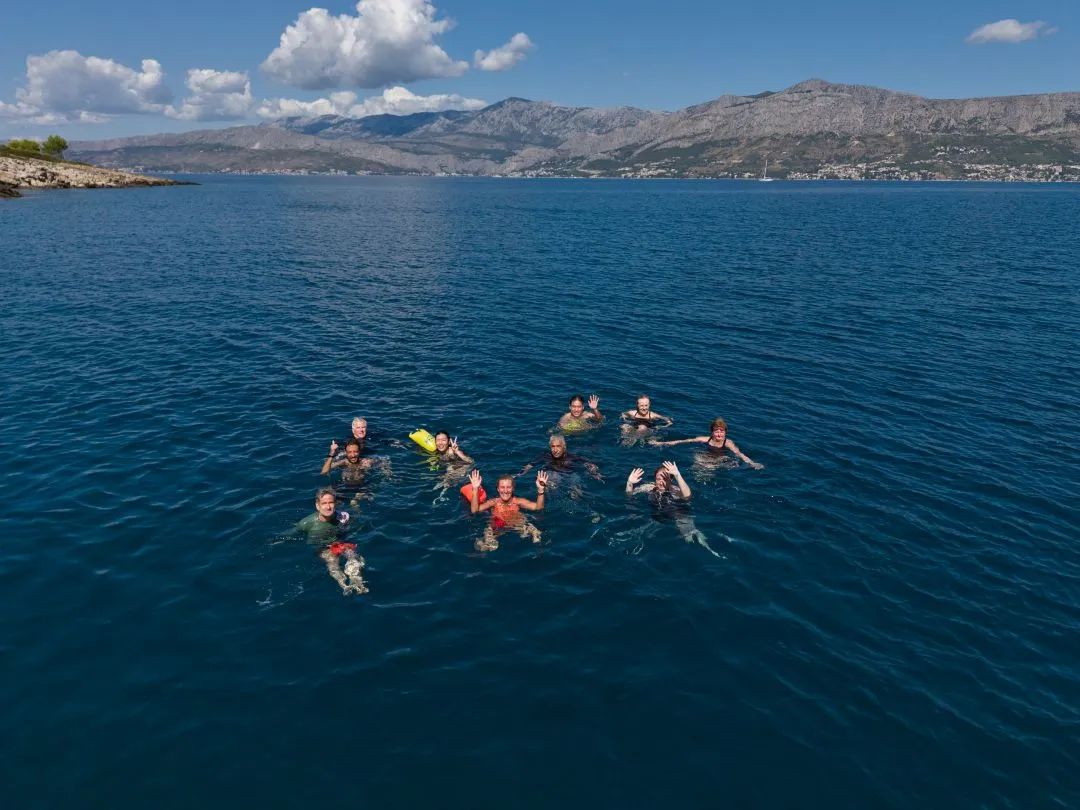
The right boat size changes what Croatia you get to see — and that is true whether you are looking at Istria, the Kvarner Gulf, or the Dalmatian islands. A private motor yacht under 40 guests unlocks the coastline the big vessels never reach, and for open water swimmers it is the only format where the trip can genuinely be built around the water. Match the boat type to what you actually want from the week and the rest tends to follow.
Swim the Northern Croatian Coast With Us
Sept 12 to 19, 2027. Pula to Šibenik aboard a private yacht, capped at 28 guests, with coached open water swimming every day.
Group of 3: $3,000 per person
1 cabin · 3 beds · $900 deposit to hold your spot. Was $4,500.