

Open Water Swimming Tips · Coached Swim Trips · All Levels
Open Water Swimming Tips:
Learn Them, Then Swim Them in Croatia
If you can swim a few lengths of the pool, you can learn to swim in open water. The skills are not complicated. What changes is the environment: no walls, no lane lines, no black line on the bottom, and water that moves. These open water swimming tips are the same ones I give every swimmer who joins one of our trips, from nervous first-timers to strong pool swimmers trying the sea for the first time.
But reading tips only gets you so far. The fastest way to make them second nature is to practise them with a coach beside you, in warm, clear water, day after day. That is exactly what our coached swim trips are built for.
Practice Your Open Water Swimming in Exotic Locations
Trips for all skill levels, distances and lengths. Every Swim Traveller trip turns these open water swimming tips into daily practice, with qualified coaches in the water, kayak support on every swim, and routes chosen for calm, clear water. Our next departure is Croatia 2027: eight days aboard a private yacht, sailing from Pula to Šibenik.
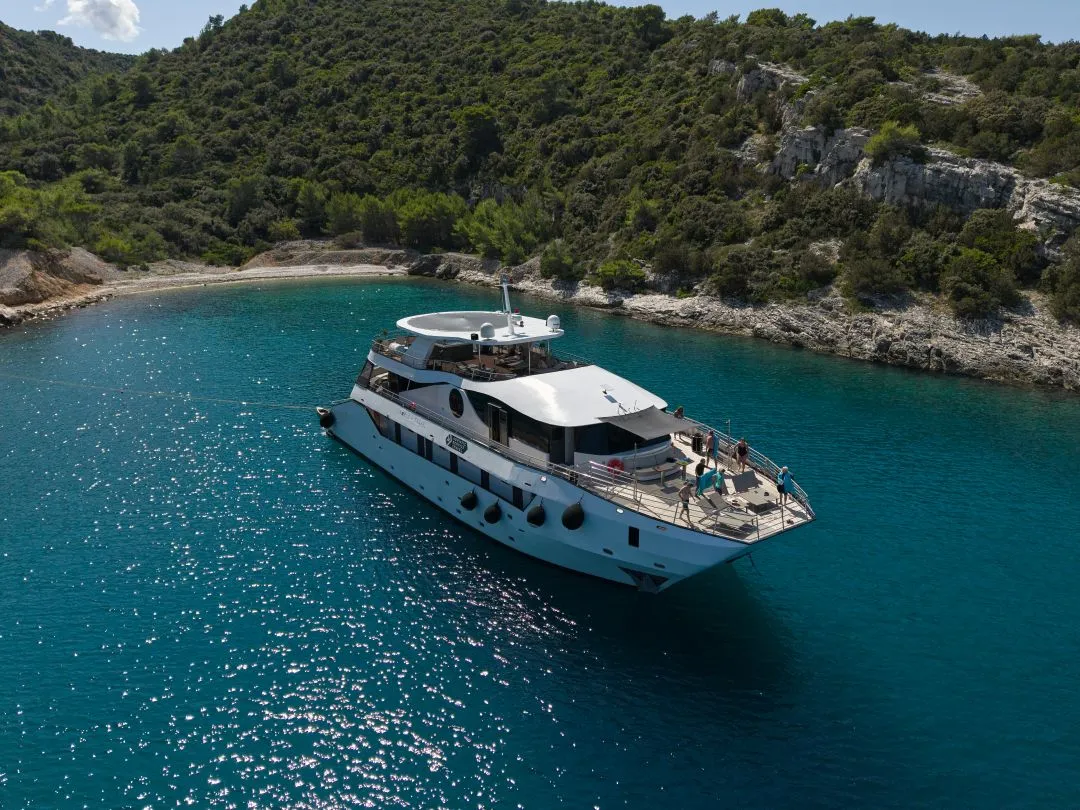
Coves Only a Yacht Can Reach
Sakarun's tropical shallows on Dugi Otok. The wild, pine-fringed islands of Cres and Lošinj. Rab's medieval walls rising from the sea. Small boat cruises in Croatia simply cannot match the anchorages a private vessel unlocks. These are the kind of anchorages you only hear about from people who have actually sailed this coast before.

Adventure at Your Speed
Want to spend the morning on the sun deck or soak in the jacuzzi? That is absolutely fine. Join the swims whenever it suits you. Every day is yours to shape, and nobody is keeping score.
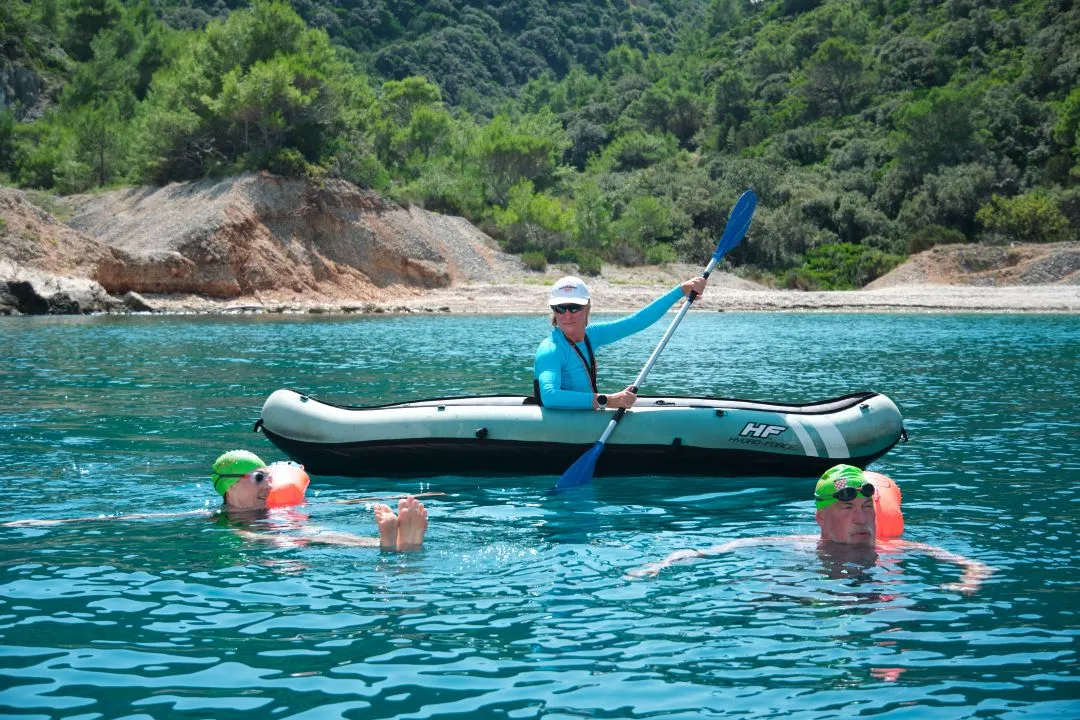
Open Water · Expert-Guided Swims Every Day
Island to island. Yacht to shore. Qualified coaches lead every swim, supported by guides monitoring from kayaks. 1 to 4km daily, at your pace, at your level.
Croatia 2027: Tides of Turquoise. Sept 12 to 19, 2027 · Pula to Šibenik · Max 28 guests · From $4,500, or $3,000 per person for groups of 3. See the full trip →
Not ready to book yet? The rest of this guide covers the open water swimming tips we work on during every trip, so you can start practising at home.
Why Open Water Feels So Different From the Pool
Pool fitness does not transfer one for one. Plenty of capable lap swimmers find their first open water swim harder than they expected, and that is normal. Four things catch people out:
- No visual reference. Without a line to follow, most swimmers drift off course within a minute.
- No walls. There is nowhere to stop and stand, so pacing matters far more.
- Temperature. Even pleasant summer sea water is usually cooler than a heated pool, and the first minute can take your breath away.
- Movement. Chop, swell and current change how your stroke feels and how far each one takes you.
None of these are reasons to stay out of the water. They are simply the things to prepare for, and every tip below addresses one of them.
Open Water Swimming Safety: The Non-Negotiables
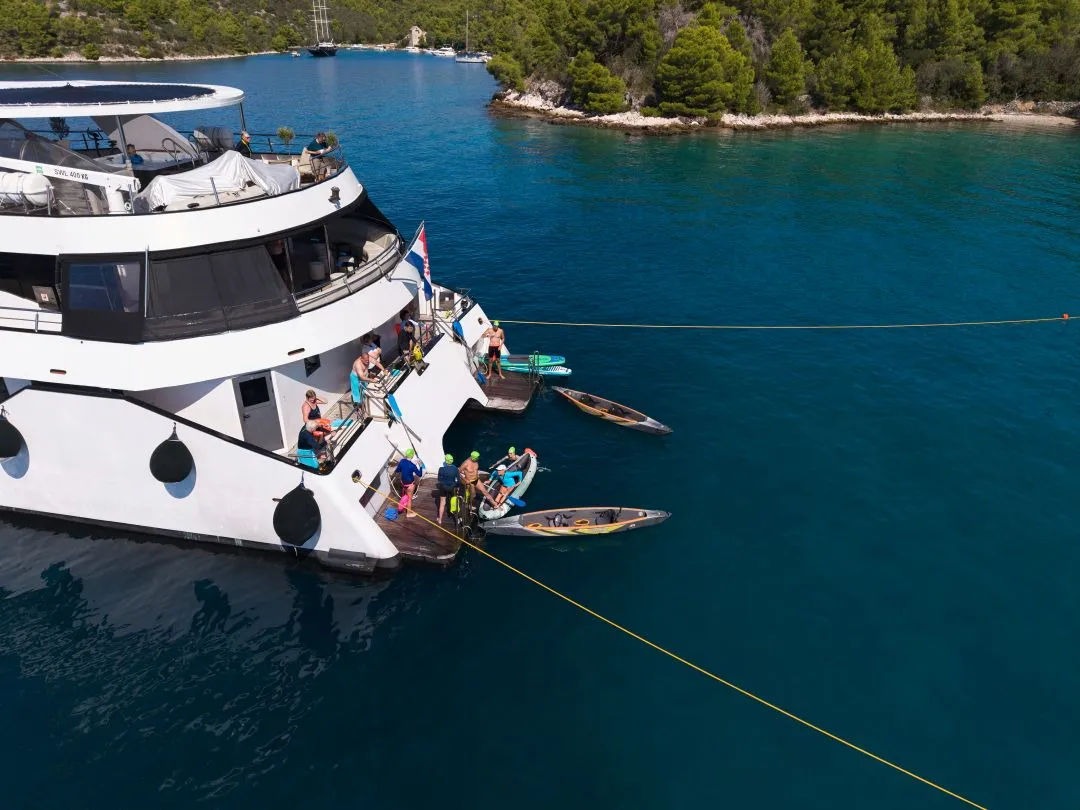
Before you think about technique, get these right. They are the basis of every swim we run, and the same advice you will find from U.S. Masters Swimming and other governing bodies.
- Never swim alone. Swim with a buddy or an organised group, ideally with a kayak or boat alongside.
- Be visible. Wear a bright swim cap (orange, pink or yellow, not white) and consider a tow float. Boats need to see you.
- Check conditions first. Water temperature, wind, waves, boat traffic, tides and local water quality reports.
- Know your exit before you get in. Pick where you will come out, and a backup spot in case conditions change.
- Swim parallel to the shore when you are starting out, so land is never far away.
- If you get caught in a current, do not fight it head on. Swim across it, parallel to the shore, until it releases you.
If you ever get into trouble: roll onto your back, float, and breathe. Then raise one arm and call for help. Floating buys you time and calm. Fighting the water uses up both.
How to Swim in Open Water: Getting In Calmly
The first two minutes decide how the rest of the swim goes. This is where most beginners panic, and almost always for the same reason: cold water shock. When cool water hits your chest, your body triggers a gasp reflex and fast, shallow breathing. It feels alarming, but it passes, usually within a minute. The RNLI's guidance on cold water shock is simple: pause, relax and let it settle before you start swimming.
Here is the entry routine I teach:
- Walk in slowly. Splash water on your face, neck and wrists before you go under.
- Stand or float and exhale. Long, slow breaths out, through your nose or mouth, until your breathing settles.
- Put your face in and blow bubbles. Ten or so easy exhales underwater, before you take a single stroke.
- Start at half pace. Swim the first few minutes slower than feels necessary. You can always speed up.
That slow start is the most underrated of all open water swimming tips. Almost every panic I have seen in the water started with someone sprinting the first 50 metres.
Open Water Swimming Technique: Sighting, Breathing and Stroke

Sighting
Sighting is how you swim in a straight line without a black line to follow. Pick a big, fixed landmark ahead of you, such as a building, a tree or a boat at anchor. Then, every 6 to 10 strokes, lift just your eyes above the surface (think crocodile eyes, not a periscope), glance at the landmark, and turn your head to breathe as normal. Lifting your whole head drops your legs and costs energy. Practise it in the pool first by sighting a water bottle at the end of the lane. Of all the open water swimming tips in this guide, sighting is the one that saves the most energy.
Breathing
Learn to breathe to both sides. Bilateral breathing keeps your stroke balanced, which helps you swim straighter, and it means you can always breathe away from waves or sun glare. Most importantly, exhale fully underwater. Holding your breath is the fastest route to feeling out of air.
Stroke
Open water rewards a slightly different stroke from the pool. A little more rotation, a longer reach and a steady, relaxed kick will carry you further for less effort. A higher arm recovery helps clear chop. You do not need a perfect stroke to enjoy the sea, but a calm, repeatable one makes a huge difference over a longer swim.
Swimming in a group
Swimming just behind or beside a slightly faster swimmer, known as drafting, can save real energy. Keep a respectful distance at first and get used to having people around you before you try it.
Open Sea Swimming Tips: Waves, Currents and Salt
Sea swimming adds its own variables. A few open sea swimming tips that make the biggest difference:
- Salt water helps you float. You will sit higher in the sea than in a pool, which many beginners find reassuring.
- Time your breathing with the waves. In choppy water, breathe on the side away from the chop, and be ready to take an extra stroke before you breathe.
- Swim into the current first. On an out-and-back swim, head into the current while you are fresh, so it carries you home when you are tired.
- Rinse your goggles and your mouth. A bottle of fresh water on shore makes a long sea swim far more comfortable.
This is one reason our Croatia trip follows calm, sheltered water. Croatia's island channels and protected coves are some of the most beginner friendly sea swimming in Europe, and our guide to the best places to swim in Croatia covers the spots we love most.
Gear That Actually Helps
You need very little kit to start. These open water swimming tips on gear are about comfort and visibility, not speed.
- Bright silicone cap. Visibility and a little warmth.
- Goggles for the light. Tinted or mirrored lenses for bright sun, clear lenses for overcast days.
- Tow float. Makes you visible and gives you something to rest on.
- Wetsuit, if the water is cool. A swimming wetsuit adds warmth and buoyancy. In warm summer seas, many swimmers do not need one.
- Anti-chafe balm. On the neck and underarms, especially for longer swims in salt water.
Dealing With Nerves in Open Water
Feeling anxious in open water is common, including among experienced pool swimmers. It is not a sign you are not cut out for it. The fix is rarely more fitness. It is more familiarity.
- Start with short swims close to shore and build up gradually.
- Practise floating on your back and treading water until both feel easy. Knowing you can stop and rest anywhere changes everything.
- Focus on long exhales. Calm breathing calms the mind.
- Swim with people you trust, and with support in the water.
Put These Tips Into Practice With a Coach

Coached Open Water Swimming · All Levels
Reading open water swimming tips is a good start. Practising them with a coach in the water beside you is how they become second nature. On every Swim Traveller trip, each swim is briefed beforehand, supported by kayak and boat, and followed by technique feedback. Swims are always optional, and groups are kept small so every swimmer gets real attention.
New to open water or training for something bigger, the format works the same: short or long swims, beginner or experienced, every swim optional. Read more about how we coach, then take a look at the Croatia 2027 swim trip.
Open Water Swimming FAQ
Is open water swimming safe for beginners?
Yes, if you follow basic open water swimming tips and precautions. Swim with others, stay visible, check conditions, start close to shore and build up gradually. Coached and supported group swims are the safest way to start.
How far should a beginner swim in open water?
Start with 10 to 15 minutes, or a few hundred metres, close to shore. Distance comes quickly once you are relaxed. On our trips, daily swims range from 1 to 4km, and every swim is optional.
Do I need a wetsuit for open water swimming?
Not always. In cool water a swimming wetsuit adds warmth and buoyancy. In warm summer seas like the Adriatic in September, many swimmers go without one.
How do I stop panicking in open water?
Slow your entry, exhale fully underwater, and start at half pace. If you feel panic rising, roll onto your back, float and breathe until it passes. Practising floating and treading water builds the confidence that stops panic before it starts.
Can I join a swim trip if I am new to open water?
Yes. Our trips are built for all levels. Coaches adapt every session, kayak guides monitor every swim, and you choose how far you go each day, anywhere from a short coached swim to 4km.
Croatia 2027: Tides of Turquoise · Sept 12 to 19 · Pula to Šibenik · Coached open water swims every day
Reserve Your Cabin for 2027 → Ask Lorna a Question →